


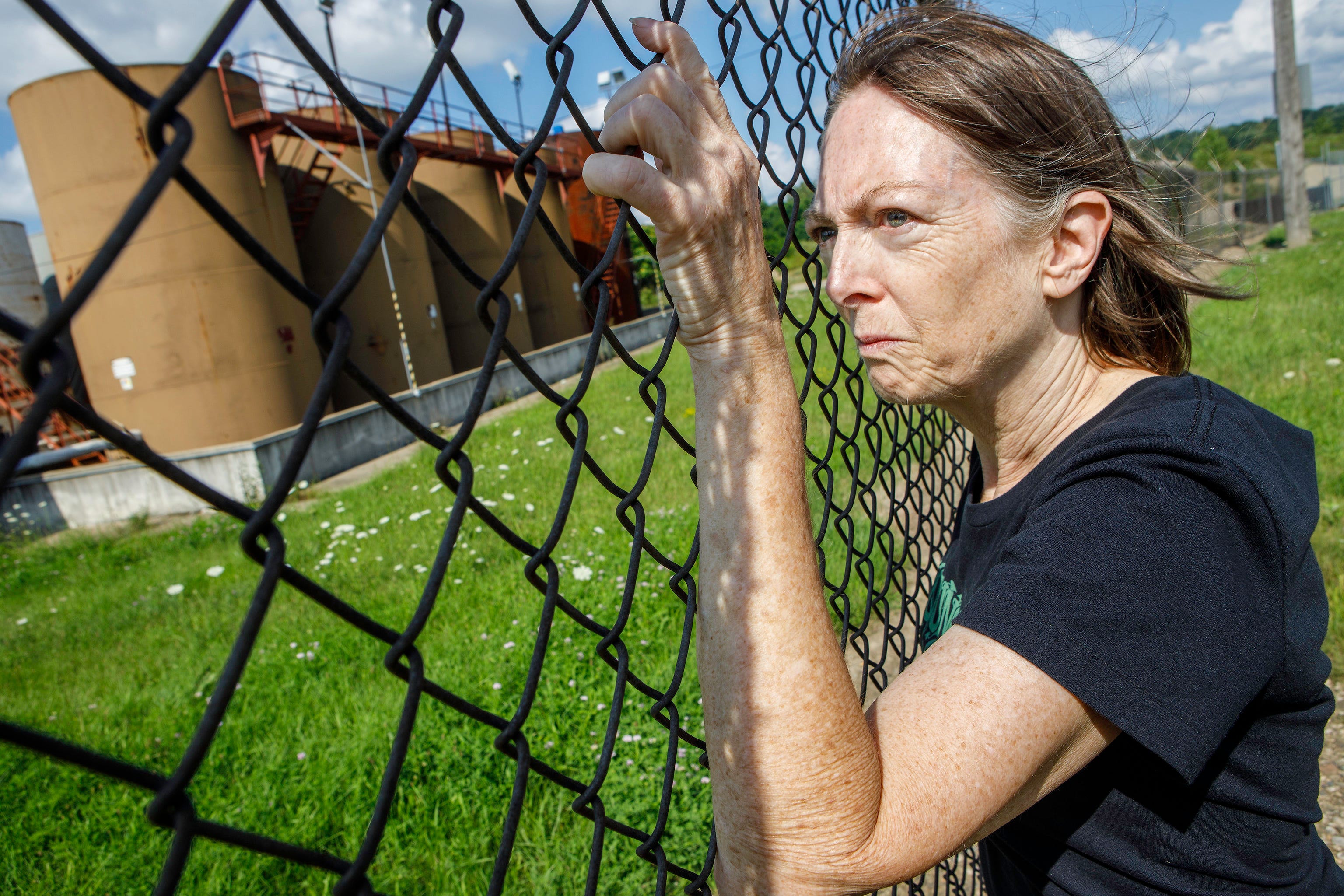
“This is a permanent reactor near your house, and it will always be a reactor because the waste got pooled together. And it will make as much radon and radium today as it will tomorrow and the next day and the next day and 30 years from now and 100 years from now and 500 years from now because the half life of this stuff is like, forever … So while it’s a naturally occurring material, when you concentrate it, you create a reactor.” The late Dr. Julie Weatherington-Rice, an earth scientist and adjunct professor for Ohio State University with a Ph.D. in soil science speaking with Public Herald
01/16/26 update: following the release of this report DEP has assured Public Herald the remaining questions are being reviewed by the Department’s three separate programs and will have answers soon.
Pennsylvania DEP has provided Public Herald with a limited update on Eureka Resources ongoing waste removal at its three sites — two in Williamsport and one in Bradford County — but failed to answer Public Herald’s core questions about radioactive testing.
In August 2025, DEP traced a sheen on the West Branch of the Susquehanna to an oil and gas wastewater spill at Eureka’s Second Street tank farm in Williamsport, prompting emergency response actions: containment booms, notice of violations and repeated cleanup inspections. As DEP investigated, inspectors also documented large volumes of waste stored beyond legal time limits at the Williamsport sites, leading to orders requiring removal. Those inspections further validated a Public Herald 2024 exclusive whistleblower report detailing how Eureka operated dangerously, illegally polluted waterways, and was a threat to the public.
DEP now says Eureka began removing the stored material from the Williamsport Second Street facility on October 27, 2025, following the spill, and has since begun emptying the Williamsport Catawissa Avenue facility (a.k.a. “Reach Road”).
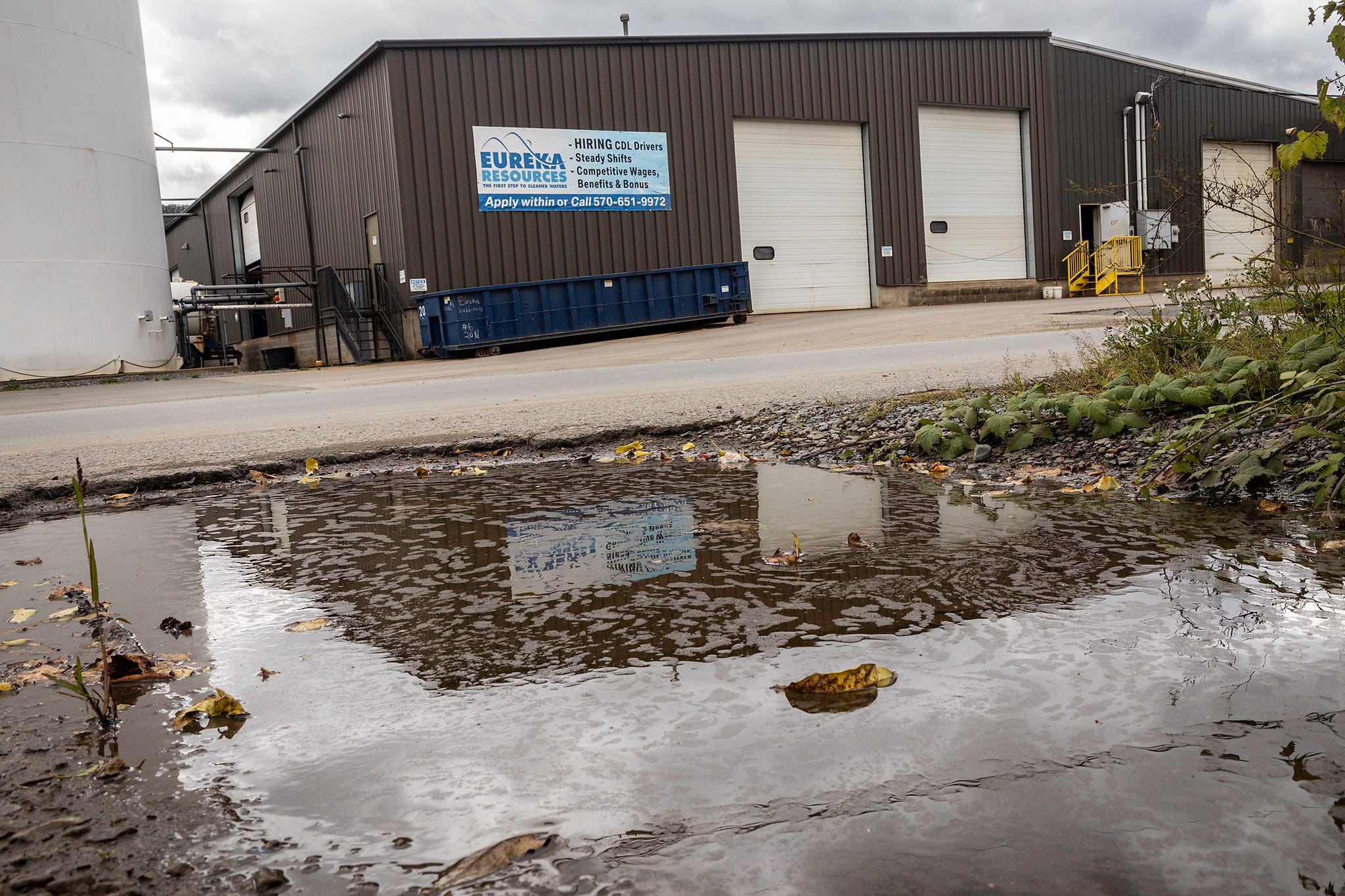
Collectively between those two Williamsport sites, approximately 2.5 million gallons of illegally stored fracking waste fluids have been removed to date.
The radioactive wastewater, once held at Eureka for treatment, has now been trucked to Kleese Disposal in Ohio, and a “waste oil product” has been sent to a recycling facility. DEP says Eureka is evaluating additional “acceptable” disposal or fluid-management options, including reuse within the gas industry.
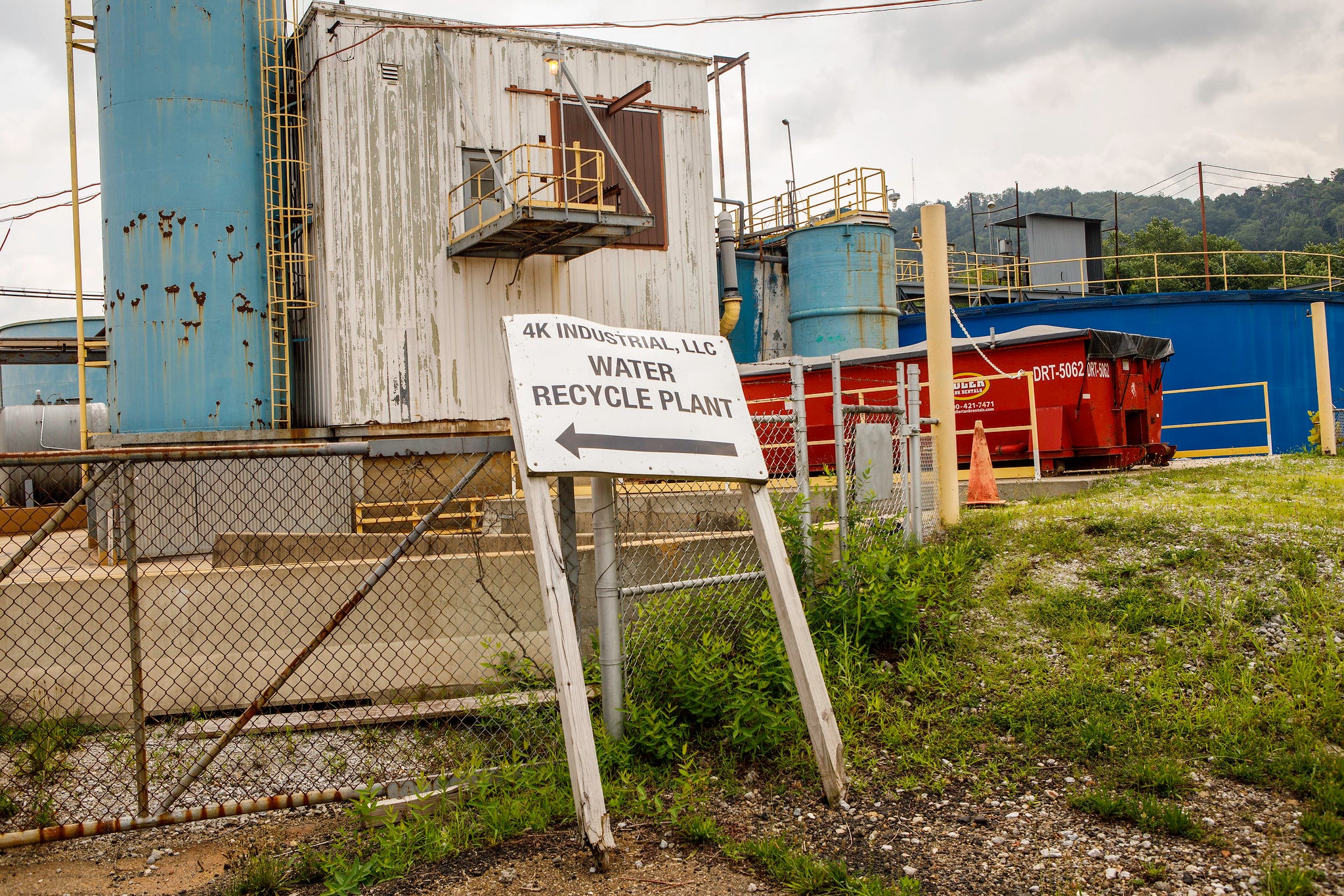
According to DEP’s latest, removal has not yet begun at Eureka’s Standing Stone facility in Bradford County, who’s also illegally storing fracking’s radioactive waste.
DEP shared that its Waste Management Program issued Notices of Violation on January 8, 2026 for all three facilities, citing noncompliance with prior enforcement actions and warning of escalated enforcement if the waste is not removed by the end of January. Links to those DEP records are included at the end of this article.
2.5 Million Gallons and What DEP Hasn’t Published
DEP’s new disclosure supplies a single total for the waste removed from the two Williamsport sites (approximately 2.5 million gallons), but does not publish a basic ledger for the public to determine: 1. the baseline inventory at each site, 2. the gallons removed from each site to date, and 3. the gallons remaining at each site 4. the radioactive measurement of the fluids.
Because DEP has chosen not to provide that ledger, we have to rely on the 2025 numbers shared by the Department that were published at Public Herald.
In the articles “Twenty-Six Days Later: DEP Logs Cleanup at Eureka — Still No Radium Tests, & Company Now Floats Lower Spill Totals” and “Oil in the Walls, Booms in the Drains,” DEP established that the Second Street tank farm in Williamsport held 1,378,897 gallons of oil and gas liquid waste across 70 tanks (a figure DEP documented in August 2025). DEP’s new note now states that roughly three quarters has been removed from Second Street.
If DEP’s earlier documented inventory (1,378,897 gallons) is used as the baseline for Second Street, then the “not yet removed” remaining at Second Street should be approximately 345,000 gallons of radioactive fracking waste fluids.
Also in Williamsport, DEP says about half of the material at the Catawissa Avenue facility remains. At our best guess, the Department’s own update implies roughly 1.81 million gallons remain across the two Williamsport facilities combined (about 345,000 gallons at Second Street plus about 1.466 million gallons at Catawissa Avenue) that’s expected to be sent to Ohio.
This estimate should be treated cautiously. DEP has repeatedly allowed key figures in this case to drift or be re-framed over time, most notably the company’s shifting spill totals in the early phase of the Williamsport incident, and DEP’s continued reliance on preliminary or incomplete disclosures instead of publishing full lab work and a consistent inventory ledger.
At this time, the third Eureka site, Standing Stone, known for fatal accidents and Public Herald’s investigation about producing packaged pool salt from treating radioactive wastewater, is untouched — all of its waste remains on-site.
The most recent public inventory figure DEP established in 2025 — detailed in “Oil in the Walls, Booms in the Drains” — was 923,178 gallons of oil and gas liquid waste stored unlawfully beyond time limits at Standing Stone. DEP has not provided any updated Standing Stone inventory totals in its January 2026 communications to Public Herald.
Notices of Violation January 8, 2026: DEP Documents Noncompliance For All Three Eureka Facilities
DEP’s January 8, 2026 Notices of Violation make explicit that enforcement orders have been in place for months, and Eureka has not complied.
Location #1: Catawissa Avenue, a.k.a. Reach Road (Williamsport)
DEP states it issued an Administrative Order on July 9, 2025 requiring Eureka to remove all oil and gas liquid waste from the site within 90 days and dispose/recycle through a permitted facility, along with an Assessment of Civil Penalty requiring payment of $5,500 within 30 days. DEP says Eureka has not complied with the Order or paid the penalty as of January 8, 2026, and “recommends” removal of the waste and payment by January 31, 2026, or escalated enforcement may follow.
Location #2: Second Street (Williamsport)
DEP states it issued an Administrative Order on August 19, 2025 requiring Eureka to remove all oil and gas liquid waste from the site within 30 days and dispose/recycle through a permitted facility. DEP says Eureka has not complied as of January 8, 2026, and again “recommends” removal by January 31, 2026, or escalated enforcement may follow.
Location #3: Standing Stone (Bradford County)
DEP states that a Commonwealth Court stipulated order dated August 12, 2025 required Eureka to empty Tank T-33 by September 30, 2025 and not use the tank until repairs and testing were conducted.
DEP further states it issued an Administrative Order on September 2, 2025 requiring removal of all oil and gas liquid waste within 90 days. DEP says Eureka has not complied with either the court order or DEP’s administrative order as of January 8, 2026, and once again “recommends” removal by January 31, 2026, or escalated enforcement may follow.
All three Notices cite noncompliance as unlawful conduct under Pennsylvania’s Solid Waste Management Act enforcement provisions, underscoring that this is not a paperwork dispute. It makes clear it is ongoing, documented failure to comply with corrective orders at multiple facilities.
The Radioactive Question DEP Keeps Evading — And Why A 2016 TENORM Study Matters Here
Public Herald’s central unanswered question since August remains the same one DEP has still not answered in January 2026: “what is the radioactive content of the waste at the site, what testing has actually been performed (including whether gamma spectroscopy was used), and what are the results in soil, water, and drinking water infrastructure affected by the spill and by illegal long-term storage?”
Although, DEP has assured us that they are working on answering whether radium is being tracked in soil, water, drinking water systems, and the tanks themselves surrounding the August 2025 Eureka wastewater spill — and whether that testing is using gamma spectroscopy at a minimum 21 day holding period.
In our August 2025 article “DEP Releases Update on Eureka Resources — Fails To Use The “Right Test” For Radiation,” DEP describes the use of an AccuRad radiation meter to survey the spill site and said it did not detect radiation above background — the conclusion DEP made scientifically couldn’t be made for radium (the key radioactive component of fracking waste) with that type of tool. Public Herald has asked the Department to produce gamma spectroscopy results for the tank fluids, the residual waste, or downstream pathways in order to make the conclusion about background changes for radium. That is one of the gaps Public Herald has repeatedly pressed DEP to close.
Public Herald also notes it has been waiting — since the end of the Wolf administration — for records connected to a statewide mandate to monitor landfill leachate for radioactivity, and contests DEP’s rationale for withholding lab reports as “under investigation.” The Wolf mandate was prompted by TENORM concerns unveiled by whistleblowers and journalists reporting on the issue (TENORM is an acronym that refers to fracking’s concentration of radioactive waste).
DEP’s own 2016 TENORM Study Report documents that oil and gas waste streams/fluids can carry radium at levels orders of magnitude above drinking-water standards (5 pCi/L), in fact above a thousand times those standards for radium (more than 5000 pCi/L), and that treatment pathways do not reliably remove radium to safe levels as promised by companies like Eureka. DEP’s Radiation Protection program materials also acknowledge the study’s revisions and data table corrections — an institutional reminder that measurement choices, methods, and reporting transparency matter when it comes to fracking waste.
Dr. Daniel Bain, University of Pittsburgh’s Department of Geology and Environmental Science research scientist who’s published studies on fracking’s waste, shared a warning to Public Herald in 2025 that the threat in this story is not abstract,
“There’s a lot of radium associated with all this [fracking waste] and if it doesn’t get put somewhere safe people are going to get hurt.”
What we are seeing is this waste has real radioactive consequences when it is not publicly auditable in real-time and has been mishandled, spilled, or moved into dangerous disposal pathways with lackluster oversight.
What Comes Next? Public Herald Sent Five Questions: DEP Answered One
DEP’s January 2026 update primarily responds to only one of Public Herald’s five questions: the status of removal and where it is going. DEP has still not answered the radioactive testing questions that began this series.
The Department’s continuing refusal to provide radium-specific results and gamma spectroscopy data in a time-sensitive manner leaves the public in the dark about basic scientific records for evaluating risk, accountability, or remediation.
January’s paperwork shows DEP is telling Eureka to remove all waste and produce disposal documentation or face escalated enforcement in the coming months. But the public’s unresolved questions, about radioactivity or the status of the plume, are not solved by hauling the waste out of state.
Without a published inventory ledger, without full lab results, and without radium-specific testing data for impacted pathways, the public cannot verify what was in the tanks, what entered the river and stormwater system, what remains in the environment, and what risks are being exported into disposal channels with limited transparency.
Ohio will now be faced to answer those questions as well, or hide them underground or leave it scattered throughout NPDES permits. If Public Herald’s 2021 reporting, published in partnership with Sandusky Register, is any indicator, “Investigation Uncovers Ohio Is “Illegally” Building Radioactive Mountains, Affecting 26 Waterways.” expect The Buckeye State to be an open door for the rest of Pennsylvania’s unsolved waste issues.
***
For readers who want to dig more into the history of DEP & Eureka for this story, see prior reporting, including Oil in the Walls, Booms in the Drains and Twenty-Six Days Later.
Public Herald would like to thank all of our subscribers and paid subscribers here on Substack and at Patreon for helping to keep these investigative reporting projects alive.
DEP enforcement records referenced in this report: