


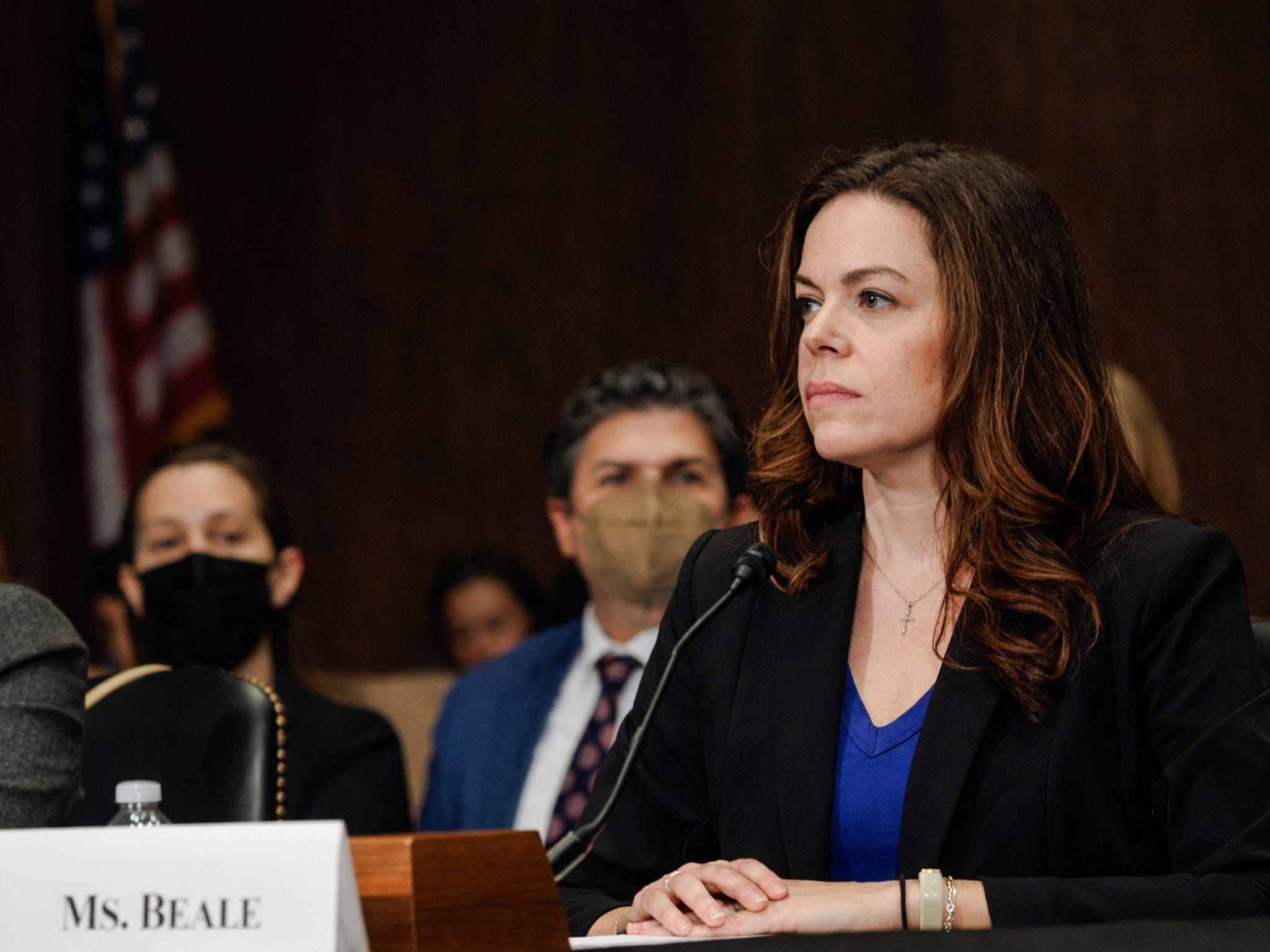
I think our immune systems have had enough pundits trying to sanitize COVID.
For years, the public has been trained to hear COVID and think respiratory illness — a virus that looks like a cold for most people with a neat little recovery arc aided by vaccination or natural immunity. This framing is still baked into the World Health Organization’s public description of coronavirus disease, which states most people infected will experience “mild to moderate respiratory illness.” A message repeated by Centers for Disease Control and Prevention’s plain-language COVID page, which says COVID-19 “most often causes respiratory symptoms.”
But the evidence no longer fits that story. It hasn’t for a long time.
What more and more studies are finding is that what’s unfolding is not merely a respiratory infection with some unlucky lingering effects. Instead, we are experiencing a virus — COVID (i.e. SARS-CoV-2) — repeatedly showing the capacity to damage, dysregulate, and deplete the immune system; sometimes for months, sometimes for far longer, and sometimes in ways our public and private health institutions don’t name plainly, or test properly.
That is why the official COVID definition needs to change.
Not tweaked. Not softened with a footnote. It needs to be discarded and changed.
A study to begin an end to the old definition
The 2025 paper in the International Journal of Infectious Diseases “Persistent attenuation of lymphocyte subsets after mass SARS-CoV-2 infection” looked at 40,537 patients across pre-COVID, mass infection, and post-COVID phases.
Its findings are not subtle.
During mass infection, T cells, CD4-positive helper T cells, CD8-positive killer T cells, Natural Killer cells (NK), and B cells all dropped significantly. Even 20 months later, CD8-positive T cells remained 9.9% below baseline. The recoveries varied by age and sex, with older adults and males showing more prolonged lymphopenia, meaning abnormally low lymphocyte counts. And in patients with cardiovascular disease, T lymphocytes remained 72.9% below baseline for 20 months post-infection.
The authors didn’t hedge the implication. They wrote that their findings “redefine SARS-CoV-2 infection as a condition of long-lasting immune compromise.”
Read that again.
Not how COVID “may contribute to lingering symptoms.”
Or how COVID “can sometimes affect other organs” and “appears to have complex sequelae.”
It says COVID has a long-lasting immune compromise.
If a peer-reviewed study of that scale can say it that clearly, then our public institutions can no longer be snorting cocaine off a germy toilet to flex immune-maxxing, or make excuses that it’s best to lead with the language of a respiratory inconvenience.
How children’s data destroys the “mild Omicron” fairy tale championed at the Washington Post
The minimization got worse in the Omicron era when the Washington Post attempted to conclude in an “investigation” that Omicron was less severe and Long Covid rates were going down before they had enough data to make those conclusions. Essentially, the public was fed a message in every direction that things were now “milder” or “less severe” — usually with a subheading about vaccine success. One that got the most play was COVID was now “Like a cold.”
All of these slogans aged like milk once you start looking at the follow-up data in new studies.
A 2025 Lancet Infectious Diseases pediatric RECOVER study examined a massive cohort of children and adolescents and found a troubling reinfection reality. Although T-cell responses remained stable in kids, neutralizing antibody concentrations declined over time, possibly compromising immunity upon reinfection, and during the Omicron era, while reinfection ran wild, protection from natural infection diminished more rapidly.
This was hardly a story about a virus getting gentler over time in any meaningful public health sense.
The COVID story happening to children worldwide was a story about how repeat exposure continued to exact multisystem harm while immune protection fades in ways the public was never asked to take seriously.
That same RECOVER work tied reinfection in children and adolescents to a higher risk of Long Covid and a wider range of post-acute problems: including heart, kidney, autonomic nervous system, cognitive, respiratory, and damaging (written as fatigue-related) outcomes.
In other words, we were all sold a story that COVID was “mild,” while our kids’ immune systems, and our own immune systems, developed compound damage.
Long Covid is not ME/CFS by another name
Today is International Long Covid Awareness Day. And the distinct, unique, immune-damaging characteristics of this disease have been under attack since the name Long Covid was formed.
In the past (and in some cases this is still ongoing) far too many ME/CFS advocates and researchers tried to convince people with Long Covid that it was nothing new, another post-viral [add your acronym here], even going so far as to use people with Long Covid to openly call their disease a political identity, or suggest Long Covid wasn’t real and it was all ME/CFS or its subtypes.
HIV faced a similar public relations campaign problem with ME/CFS in the 1980s — but it was firmly shutdown when biological testing moved away from symptom criteria hypothesis to reveal people with HIV had persistent, immune-damaging virus in blood samples.
Like HIV in the 80s, Long Covid has too been cornered into a definition of symptoms analysis, and symptom-cluster hypothesis, where ME/CFS criterias such as PEM are used to represent the disease presentation of people who have measurable changes to immune cells, cardiovascular systems or organ damage.
Thankfully, new studies are shattering this kind of disease conflation toward symptom management and providing hope for potential targeted treatments.
In a 2026 Frontiers in Immunology paper, researchers compared Long Covid with ME/CFS using transcriptional and single-cell immune signatures and found Long Covid patients exhibited marked reductions in naïve CD4-positive and CD8-positive T cells, regulatory T cells, mucosal-associated invariant T cells, and gamma-delta T cells, along with reduced Natural Killer-cell frequency and altered activation patterns consistent with impaired cell-killing potential.
The study also found expansion of effector T cells, activated B-cell signatures, activated platelets, low-density neutrophils, and that monocytes shifted toward inflammatory signaling. Mechanistically, the authors identified Galectin-9–TIM-3 as a potential pathway driving depletion of gamma-delta T cells and mucosal-associated invariant T cells in Long Covid.
What matters here is not an academic taxonomy. What matters is that Long Covid again shows up as a state of specific, measurable immune remodeling and depletion, and not merely vague post-viral malaise. The same paper reports that idiopathic ME/CFS showed less pronounced immune alterations in several of those compartments, including no comparable reduction in mucosal-associated invariant T cells or Natural Killer cells and no similar T-cell exhaustion signature (all key biological features of Long Covid).
This is significant because one of the great bureaucratic escapes of the last five years has been to blur Long Covid into generic chronic illness language, as if naming the immune injury might force an obligation to respond.
The haunting persistence question is here
Then there is this question that keeps haunting every serious conversation about Long Covid: what if part of the immune damage is being driven by COVID that is still there?
And in 2024, a Lancet Microbe study on blood transcriptomics out of Belgium reported evidence of persistent SARS-CoV-2 in blood, finding both antisense-RNA — i.e. the negative sense RNA COVID uses for replication — alongside COVID’s positive sense parts like spike and viral proteins, often referred to as viral remnants. The transcriptomics study went even further and found two new strong candidates for Long Covid biomarkers, revealing COVID’s antisense-RNA viral load could be a significant long-term measurement.
Today, the Belgium researchers are working to externally validate Long Covid biomarkers. In-time, if the validation holds, it could lead to new FDA-approved whole blood testing for Long Covid patients.
That line of work was paradigm-shifting in 2024, because it moved the debate away from symptom criteria toward measurable biological signatures.
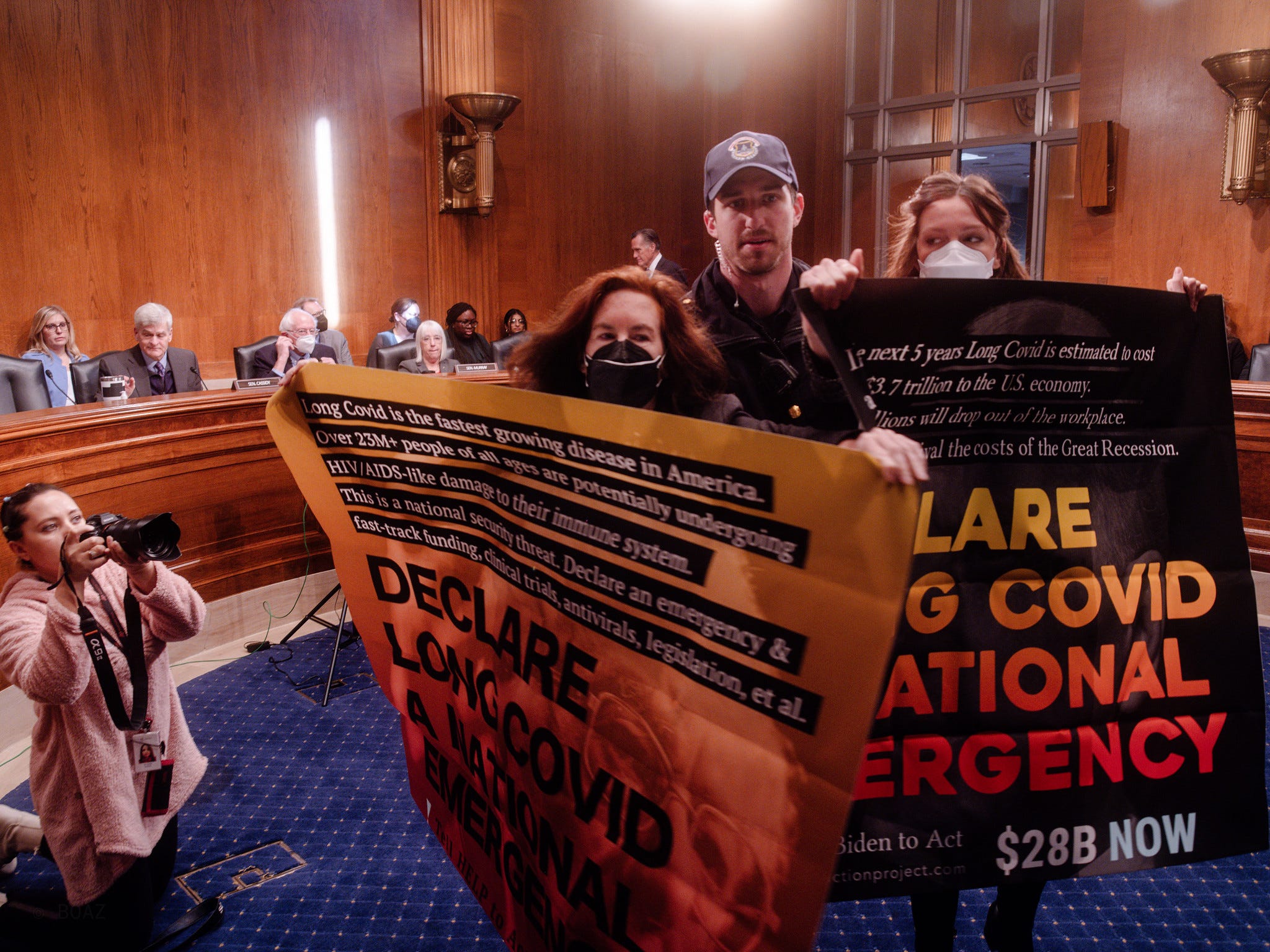
This is also where the conversation intersects with the Long Covid Action Project’s (LCAP) book: A National Treatment and Research Agenda for Long Covid. LCAP (an activist group I founded for Long Covid) argued in their book for a research and treatment framework grounded in viral persistence, immune dysfunction, and biomarker development rather than symptom management alone.
And as the European AIDS Treatment Group wrote in its discussion of Long Covid lessons from AIDS researchers, the field should borrow from HIV reservoir science and biomarker development rather than wait for perfect certainty while patients deteriorate.
That comparison can make some people uncomfortable. It should.
Not because COVID is HIV. It is not.
But because HIV research taught medicine a lesson many officials still refuse to apply here: when a virus can create durable immune dysfunction, you do not keep defining it by the first doorway it used to enter the body. You define it by the system it damages.
What should the COVID definition say?
The Centers for Disease Control and Prevention’s HIV definition is brutally simple: HIV is a virus that attacks the body’s immune system. The National Institute of Allergy and Infectious Diseases says the same thing in more technical language, explaining that the virus targets and destroys CD4-positive T cells.
This clarity is what COVID is missing from its current description.
Here is a definition that federal agencies should adopt for COVID:
COVID is a virus that can damage and dysregulate the body’s immune system, causing long-lasting immune compromise, including Long Covid.
This is more honest than the current respiratory framing. And at this point, it is more faithful to the evidence.
And the band played on… until we challenge it
So this is my challenge to agencies that still shape the nation’s understanding of COVID and Long Covid.
To HHS Secretary Robert F. Kennedy Jr.
Your own department says that, under your leadership, HHS is taking “bold, decisive action” to identify the root causes of chronic disease and “Make America Healthy Again.” If that slogan is going to mean anything beyond branding, then prove it here. Order HHS and the agencies beneath it to stop leading with the word respiratory for COVID when it is now described in peer-reviewed literature as causing long-lasting immune compromise. Put immune damage in the federal definition. Direct the Centers for Disease Control and Prevention, the National Institutes of Health, the National Institute of Allergy and Infectious Diseases, the RECOVER initiative, and every major HHS-facing public page to reflect biology instead of politics.
To NIH Director Jay Bhattacharya
You wrote that the NIH must “deliver results that matter to the public.” If NIH is serious about unified strategy, then unify the science and the public definition. A pathogen associated with persistent lymphocyte depletion, altered immune-cell architecture, reinfection immune vulnerability, and Long Covid cannot honestly be presented to the public as a mostly respiratory problem. COVID’s definition change would bring results that matter to the public.
To CDC leadership
The Centers for Disease Control and Prevention has enormous power. A respiratory-first COVID definition has helped teach physicians to overlook immune injury, helped employers trivialize repeat infections, and helped insurers and institutions treat Long Covid as ambiguity instead of biology. Change the definition, and you change the future toward COVID solutions.
To NIAID leadership
If immune dysregulation, viral persistence, and altered lymphocyte subsets are central to the aftermath of COVID, then this is squarely your terrain. Treat it like one. Stop allowing the public to imagine this virus as a short-lived respiratory event when the latest science now says otherwise.
And to FDA Commissioner Marty Makary
The Food and Drug Administration cannot pretend this is someone else’s problem. During the AIDS crisis, the FDA became part of the federal response not just by regulating drugs, but by helping shape how the disease was recognized, tested, and acted on. The FDA’s own history notes that in 1985, after HIV had been identified as the cause of AIDS, HHS announced the FDA’s decision to license the first test for the virus. This kind of test could happen again for COVID and Long Covid based on new biomarkers discovered using whole blood transcriptomic testing. The agency’s current HIV pages also make clear that the FDA’s Center for Drug Evaluation and Research regulates prevention and treatment drugs for HIV and works to make safe and effective therapies available. Knowing this, the FDA belongs in this conversation. If COVID is causing long-term immune damage, then the agency that oversees diagnostics, biomarkers, antivirals, and treatment approvals should be pushing an immune-injury framework, not inheriting a respiratory focus fantasy.
These agencies should not get to hide anymore behind inaction.
Definitions are not neutral. Definitions govern what gets screened for, what gets funded, what gets denied, what gets dismissed, what gets coded into disability systems, what employers are told to take seriously, and what the public is taught to forget or tackle head-on.
A COVID respiratory definition has helped downplay reinfection. It has helped trivialize Long Covid. It has helped turn a measurable immune problem into a debate over mood, resilience, and personal beliefs.
That time needs to end.
Because if the science says immune damage, and the agencies still say respiratory illness, then the lie is no longer scientific.
It is institutional. And therefore, we can change it.